Timing and drying
Question 1: How long does carpet take to dry?
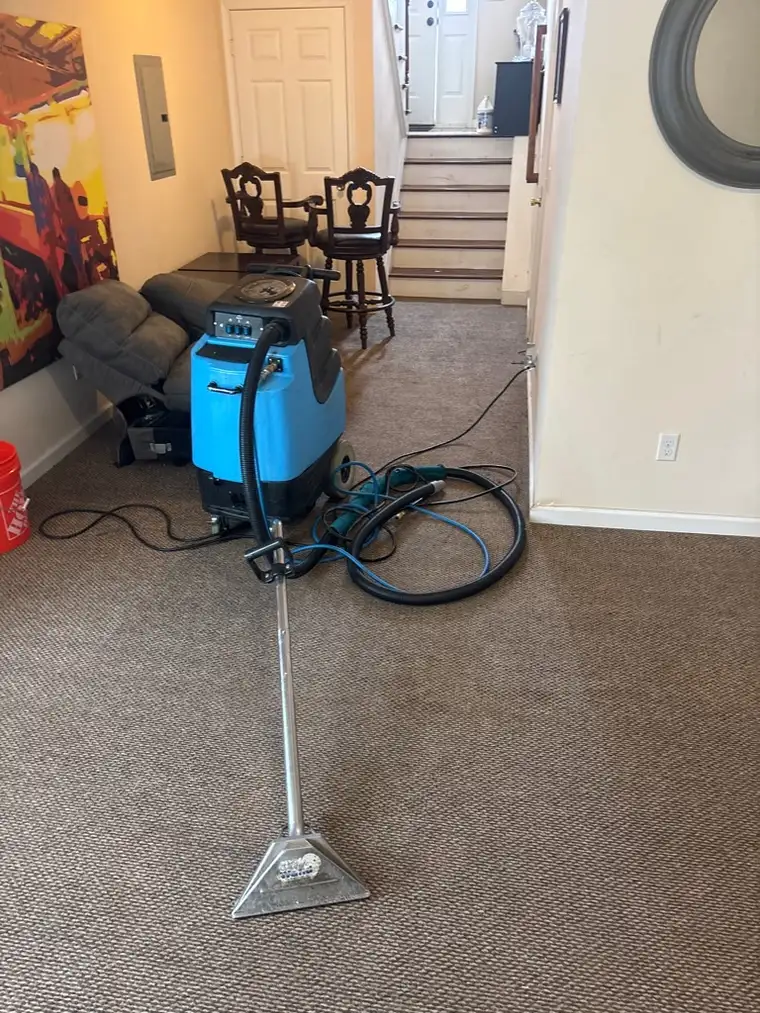
Most carpet is walkable within a couple of hours and dry the same day. Thick pile, cold weather and closed-up rooms all slow it down. We bring air movers when a room has to be back in use quickly.
Question 2: How long does a sofa take to dry?
Fabric sofas usually dry in 4 to 8 hours, and leather is faster because the cleaning never soaks in. We also bring air movers for quicker drying where a room has to be usable that evening.
Question 3: How often should carpet be professionally cleaned?
Every 6 to 12 months, depending on foot traffic, pets and lifestyle. A hallway in a house with a dog and children is at the short end of that range; a spare bedroom nobody walks through can go a year or more.
Question 4: Can you come in the evening or at the weekend?
Yes. We book by appointment 24 hours a day, and evening and weekend appointments are routine.
Products and safety
Question 5: Do you use eco-friendly cleaning products?
We use non-toxic, biodegradable products that are safe for children and pets. No ventilation is required afterwards, and pets can remain in the home.
Question 6: Will the house smell of chemicals afterwards?
It should not. Customers most often report that the house smelled fresh afterwards rather than of cleaning products.
Question 7: Is it safe for a child’s mattress or a pet’s bed?
Yes, and that is the reason we use these products. They leave no residue that needs airing out before the bed is used again.
Question 8: What is the benefit of steam over other methods?
Steam cleaning uses high heat to kill bacteria and lift dirt from deep within carpet fibers. The extraction is the important half: whatever goes into the carpet comes back out again, along with the soil it released.
Stains and odor
Question 9: Can you remove old or stubborn stains?
Our stain removal process targets deep-set stains from wine, coffee, pets and more. Fresh spills come out most reliably. Old pet urine, bleach and some dyes change the fiber itself, and no cleaning restores a fiber that has lost its color. We tell you which one you have before you book.
Question 10: Why does the same pet stain keep coming back?
Because it was never fully removed. The liquid went through the carpet into the padding, and as the carpet dried it rose back up and brought the stain with it. It has to be treated at the depth it reached rather than at the surface.
Question 11: Can you get pet smell out of a couch?
Usually. Odor in upholstery sits in the foam of the cushions rather than on the fabric, so it is treated at that depth, the same way pet stains in carpet are.
Question 12: Do you offer stain and odor removal for mattresses?
Yes. Sweat, spills, urine and general yellowing are all treated, with odor handled at the source rather than covered over. How much comes out depends on how old the stain is and how deep it went.
Rugs and upholstery
Question 13: Do you clean all types of rugs?
We clean wool, synthetic, oriental, shag and other area rugs, with the method matched to the material. The fiber is identified and the dyes are tested in a hidden corner before any moisture is applied.
Question 14: Will rug colors fade after cleaning?
No. Gentle cleaning protects the colors while removing the dirt and odor. What most people read as fading is a layer of dust across the pile that mutes every color. Remove it and the pattern comes back.
Question 15: Can you clean fabric and leather sofas?
Both, with the products and the technique matched to each surface. Leather is cleaned and then conditioned, which is the step most often skipped and the reason leather ends up stiff and faded.
Question 16: Will upholstery shrink after cleaning?
No. We use low-moisture techniques and test the fabric first, which prevents both shrinkage and water marks. Over-wetting causes both, and low-moisture cleaning exists to avoid it.
Question 17: Do you clean dining chairs and sectionals too?
Yes, all types of upholstered furniture, including armchairs, recliners, sectionals, ottomans, headboards and dining chairs.
Water damage
Question 18: Can you help prevent mold after flooding?
Yes. Drying is what prevents it, and inside 24 to 48 hours it works in most cases. Where mold is already growing, the work belongs to a mold remediation company. The EPA puts the do it yourself line at about 10 square feet, roughly a three foot by three foot patch, and does not recommend bleach as a routine cleanup. Whatever is done about the mold, the moisture has to be fixed first or it comes back.
Question 19: How fast do you need to know about a leak?
As soon as the water stops. We take calls 24 hours a day, by appointment, seven days a week, and the sooner the phone rings after the water stops, the more of the floor there is to save. Tell us where the water came from, when it stopped, which floor it is on and whether the power is off, and we set the visit.
Question 20: What should I do before you arrive?
Stop the water at the source if you can do it safely. If water has reached an outlet, an appliance or the panel, keep the power to that area off and do not step into water to reach the panel; if you cannot reach it dry, call an electrician. Lift furniture legs, boxes and anything cardboard off the wet floor, photograph the room before anything else moves, and then call. Do not run a household vacuum over standing water.
Question 21: The carpet feels dry now. Is it fine?
Not necessarily. Surface fibers give up moisture first and they are the only part you can touch. The padding and the top of the subfloor beneath can still hold a great deal of water, and those layers are enclosed, warm and dark. That is where a smell three weeks later comes from. A moisture meter on the padding and the subfloor gives the answer, with the reading compared against a dry part of the same house.
Booking and access
Question 22: Do you have a shop we can bring things to?
No. We are a service-area business. All services are performed at your home or business, including area rugs and the floor underneath them.
Question 23: Do you move furniture?
We move what two people can safely lift and put it back afterwards. Beds, dressers and anything with electronics or glass are best cleared before we arrive. If you prefer that we clean around larger pieces, say so when you book.
Question 24: My building has no elevator, or needs an insurance certificate. Is that a problem?
Neither is a problem. Walk-ups are routine and equipment goes up by hand, so tell us the floor when you book. For buildings that require a certificate of insurance or a reserved service elevator, tell us the building and we arrange it with management in advance.
Question 25: How do I get an accurate answer about a specific stain?
Send a photograph of the worst area with your inquiry. It is the fastest way to receive a clear answer about what will come out and what will not, before anything is booked.
Question 26: How much does carpet cleaning cost?
No price is published, because every job is quoted after the floor has been seen. The estimate is written before the work starts, it is for the property described and it does not change at the door. Rooms, stairs, how deep pet damage has gone, furniture, building access and rug fiber are what move the figure, and the factors are set out in what affects a carpet cleaning estimate. The rest of what to ask before booking is in how to choose a carpet cleaner in New Jersey.